
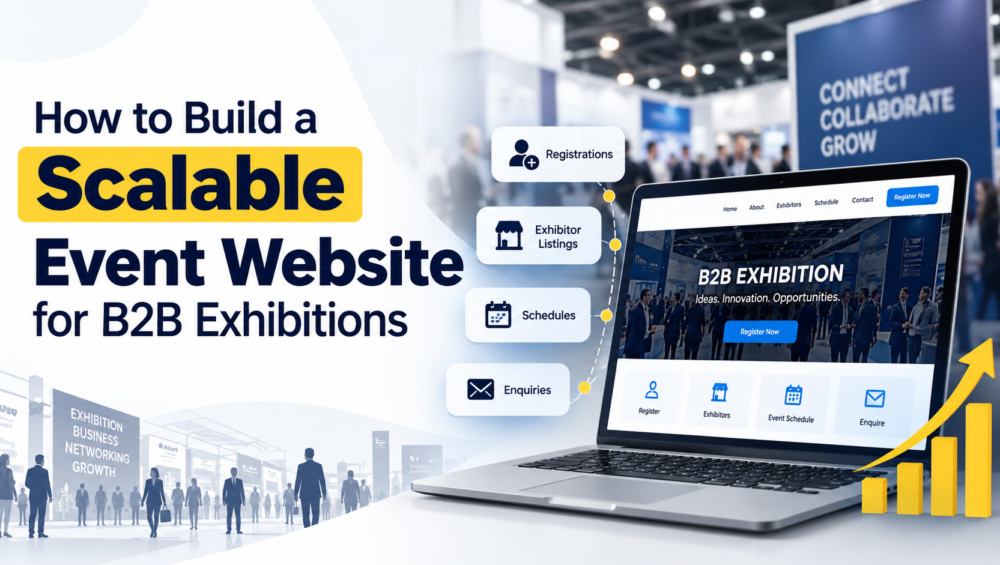
A B2B exhibition website needs to do more than display event information. It should handle registrations, exhibitor listings, schedules, enquiries, and large traffic spikes without creating a poor user experience. A scalable event website is built around these requirements from the start.
This guide explains how to build a scalable event website for B2B exhibitions, what features to include, how to plan the technology, and what to consider before development.
Why Scalability Matters for B2B Exhibition Websites
B2B exhibitions often have changing information and unpredictable traffic. Registration campaigns, email promotions, and social media activity can bring large numbers of visitors within a short period.
A scalable event website should continue working smoothly as these demands increase.
It should support:
- More visitors during registration and event periods
- Growing exhibitor and product information
- Multiple event schedules and sessions
- Higher volumes of registration data
- Additional integrations and business requirements
- Future editions of the same exhibition
Building for scalability early can reduce the need for major redevelopment later.
How to Build a Scalable Event Website
The right approach starts with understanding the complete event journey. Visitors should be able to find information quickly, register easily, and take the next relevant action.
1. Plan the Website Around User Journeys
Start by identifying who will use the website and what each visitor needs.
A typical B2B exhibition website may serve:
- Visitors looking for registration details
- Exhibitors managing their event presence
- Sponsors seeking visibility
- Speakers checking schedules
- Organizers managing content and leads
Map these journeys before development. This helps determine the required pages, features, permissions, and integrations.
2. Create a Flexible Content Structure
Event information changes frequently. The website should allow administrators to update content without depending on developers for every small change.
Use structured content for:
- Exhibitor profiles
- Speaker information
- Event sessions
- Venue details
- News and announcements
- Products or categories
- FAQs
A flexible content management system makes it easier to reuse the same structure for future exhibitions.
3. Build a Reliable Registration System
Registration is one of the most important functions of an exhibition website. A complicated process can lead to abandoned registrations.
Keep the registration flow simple and collect only information that is actually required.
Depending on the event, the system may need:
- Visitor registration
- Exhibitor registration
- Speaker registration
- Confirmation emails
- Digital tickets or QR codes
- Payment integration
- Registration status tracking
The registration system should also be tested under higher traffic conditions before the event launch.
4. Make Exhibitor Discovery Easy
Exhibitors are a major part of B2B exhibitions. Visitors should be able to find companies, products, categories, and booth information without searching through long pages.
Useful features include:
- Search and filtering
- Industry or category filters
- Exhibitor profile pages
- Product listings
- Booth or stall information
- Contact or enquiry options
A structured exhibitor directory can also improve organic search visibility when individual exhibitor and category pages are properly optimized.
A Real-World Example
A scalable exhibition website needs to handle registration, exhibitor management, dynamic agendas, high traffic, and performance together. These requirements were applied in a B2B exhibition platform developed for ProPak India, with features including advanced registration, exhibitor profile hubs, dynamic agenda management, scalable cloud hosting, SEO optimization, and analytics. Read the ProPak India exhibition website case study to see how these features were implemented.
Technology Considerations for Event Websites
Technology decisions affect how easily the website can handle future growth.
Use Scalable Hosting and Infrastructure
Choose hosting infrastructure that can accommodate changes in traffic and resource requirements. Cloud-based infrastructure can make it easier to increase computing resources when demand rises.
Caching and content delivery networks can also reduce the load on the main server by delivering frequently accessed content efficiently.
Connect the Website With Business Systems
A B2B exhibition website may need to exchange data with other systems. Integrations can reduce manual work and keep information consistent.
Common integrations include:
- CRM systems
- Email marketing platforms
- Payment gateways
- Analytics tools
- Registration databases
- Marketing automation systems
- ERP or business platforms
APIs can allow these systems to exchange information without requiring users to enter the same data repeatedly.
Performance and Security Should Be Planned Early
Website speed matters when visitors are browsing exhibitor profiles, event schedules, images, and registration pages.
Optimize images, reduce unnecessary scripts, use caching, and monitor page performance before launch.
Security is equally important because event websites may collect names, contact details, company information, and payment data.
Use HTTPS, secure authentication, access controls, regular updates, and appropriate data protection measures. Payment information should be handled through compliant payment providers rather than stored unnecessarily on the website.
Measure What Visitors Do After Launch
Analytics can show which parts of the website are helping the event achieve its business goals.
Track actions such as:
- Registration completions
- Exhibitor profile views
- Product searches
- Brochure downloads
- Enquiries
- Agenda interactions
- Traffic sources
- Conversion rates
These insights can help organizers improve campaigns, landing pages, and event communication.
FAQs About B2B Exhibition Websites
How long does it take to develop an exhibition website?
Development time depends on the number of features, integrations, content volume, and approval cycles. A basic website may take less time than a platform with registration, exhibitor management, payments, and CRM integrations.
Can an event website support multiple exhibitions?
Yes. A properly structured platform can support multiple events using reusable content models, templates, registration workflows, and administrative controls.
Should an exhibition website be mobile-friendly?
Yes. Many visitors access event information from smartphones, especially when checking schedules, exhibitor details, venue information, or registration confirmations during the event.
How can an event website handle sudden traffic increases?
Scalable hosting, caching, optimized code, a CDN, database optimization, and load testing can help prepare the website for traffic spikes during campaigns and registration periods.
What should be tested before an exhibition website goes live?
Test registration, forms, payments, search, filters, integrations, emails, mobile layouts, page speed, security, analytics tracking, and high-traffic scenarios before launch.
Conclusion
A scalable event website for B2B exhibitions needs more than attractive pages. It needs a flexible content structure, reliable registration, exhibitor discovery, integrations, strong performance, security, and useful analytics.
Planning these elements together makes the platform easier to manage as the event grows and requirements change.
If you are planning how to build a scalable event website for B2B exhibitions, Precisio Technologies can help you plan and develop a website around your event’s registration, exhibitor management, integrations, and business goals.